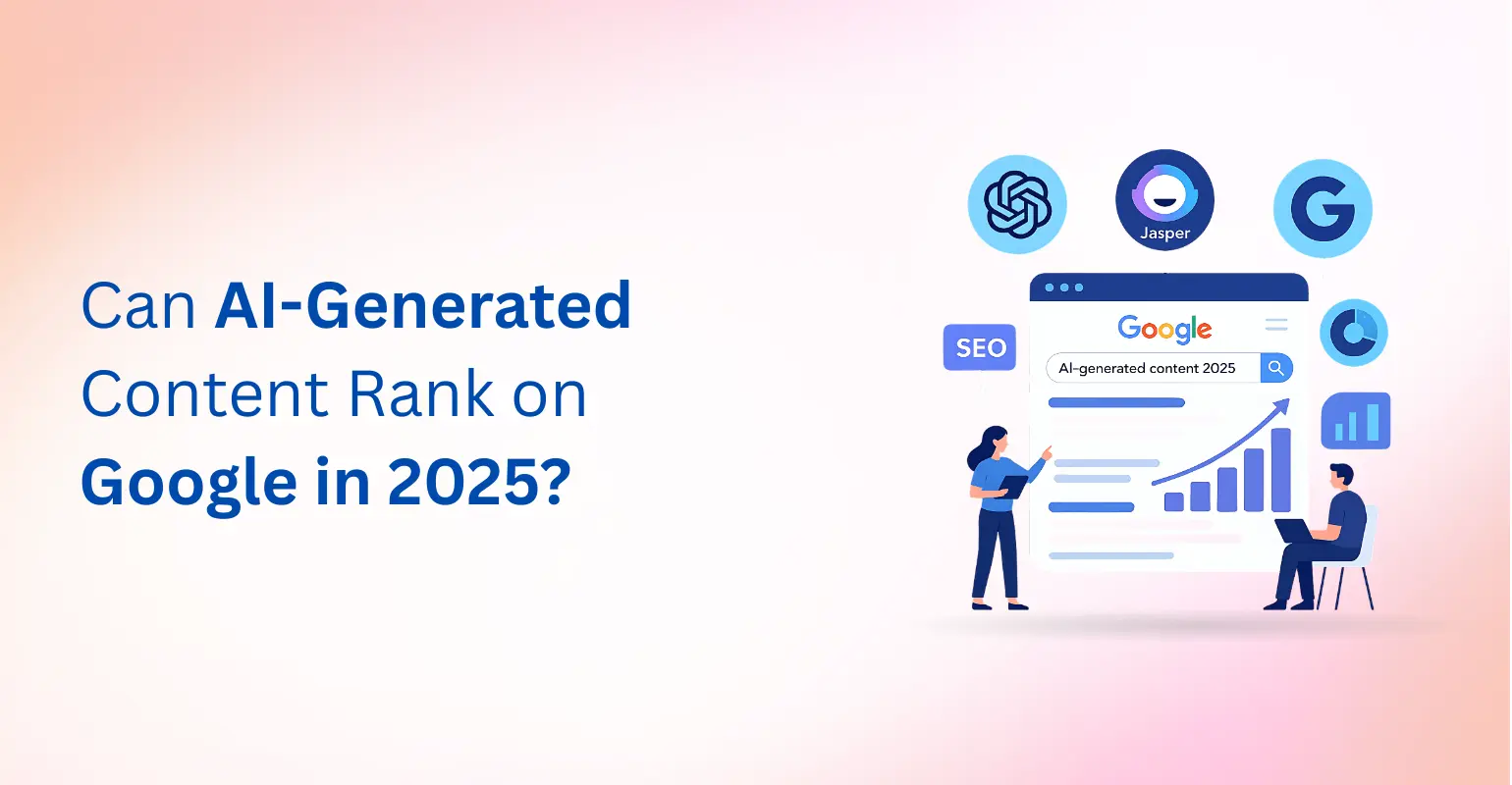
🤖 Can AI Content Rank on Google? (Truth Revealed for 2025)
Meta Title: Can AI Content Rank on Google in 2025? | SEO Tips for AI-Generated Content
Meta Description: Wondering if AI-written content can rank on Google? Learn how Google treats AI content, what works, what doesn’t, and how to make AI blogs rank better.
🏁 Introduction
With the rise of tools like ChatGPT and AI writing assistants, many website owners are asking:
“Can AI content rank on Google?”
The short answer is — Yes, AI content can rank on Google, if it meets Google’s quality standards.
But ranking depends less on who wrote it and more on how good and helpful it is.
Let’s explore what Google really says about AI-generated content and how to use it effectively for SEO.
🧠 What Google Says About AI Content
Google’s official stance is clear:
“Using AI or automation is fine as long as the content is helpful, original, and created for people — not just to manipulate rankings.”
That means AI content is not banned, but Google’s algorithms can detect low-quality, spammy, or repetitive content and push it down in search results.
✅ In short: AI content can rank if it provides value, accuracy, and original insights.
🧩 Why Some AI Content Fails to Rank
Not all AI content performs well. Here’s why many sites struggle:
- ❌ Keyword stuffing or over-optimization
- ❌ Generic, repetitive text without depth
- ❌ Lack of human touch or expertise
- ❌ No proper SEO formatting (headings, meta tags, internal links)
Google uses EEAT (Experience, Expertise, Authoritativeness, and Trustworthiness) to measure content quality.
AI alone can’t provide “experience,” so adding human review and edits is essential.
💡 How to Make AI Content Rank on Google
Here’s how to use AI-generated content the right way to get rankings:
1. Edit and Add Human Insight
Don’t publish raw AI text.
Add personal experience, real examples, or local data.
Google loves content that reflects authentic expertise.
2. Optimize for SEO
Even AI-generated text needs proper optimization:
- Include primary and secondary keywords naturally.
- Write compelling meta titles and descriptions.
- Use proper heading hierarchy (H1–H3).
- Add internal and external links.
3. Make It Engaging and Readable
Break long paragraphs, use visuals, and format with bullet points.
The easier your content is to read, the longer users stay — improving ranking signals.
4. Fact-Check Everything
AI sometimes makes small factual errors.
Always verify stats, quotes, and data before publishing.
5. Use AI for Drafting, Humans for Final Touch
Think of AI as a smart assistant — great for research and structure, but final polishing should always be done by a human.
📈 Real Examples: AI Content That Ranks
Many top-ranking blogs today use AI-assisted writing.
The key difference?
They combine AI efficiency with human creativity — editing, optimizing, and adding genuine insights before publishing.
When done correctly, these articles often rank faster because they’re well-structured and keyword-optimized.
⚙️ Tools That Help Optimize AI Content
To make sure your AI content meets Google’s standards, use:
- SurferSEO or Frase for keyword optimization
- Grammarly for tone and grammar
- Originality.ai to check uniqueness
- Google Search Console to track performance
🚀 Final Thoughts
So, can AI content rank on Google?
Yes — absolutely.
But it must be helpful, well-edited, and optimized for real users.
AI is a powerful tool, but it’s your human expertise that makes the content truly valuable.
Use AI smartly, add your own experience, and you’ll see great results on Google rankings.
✅ Quick Summary
| Factor | Importance |
|---|---|
| Human Editing | Adds credibility and accuracy |
| SEO Optimization | Improves visibility |
| Content Quality | Keeps readers engaged |
| Uniqueness | Prevents Google penalties |
| Real Experience | Builds trust and authority |